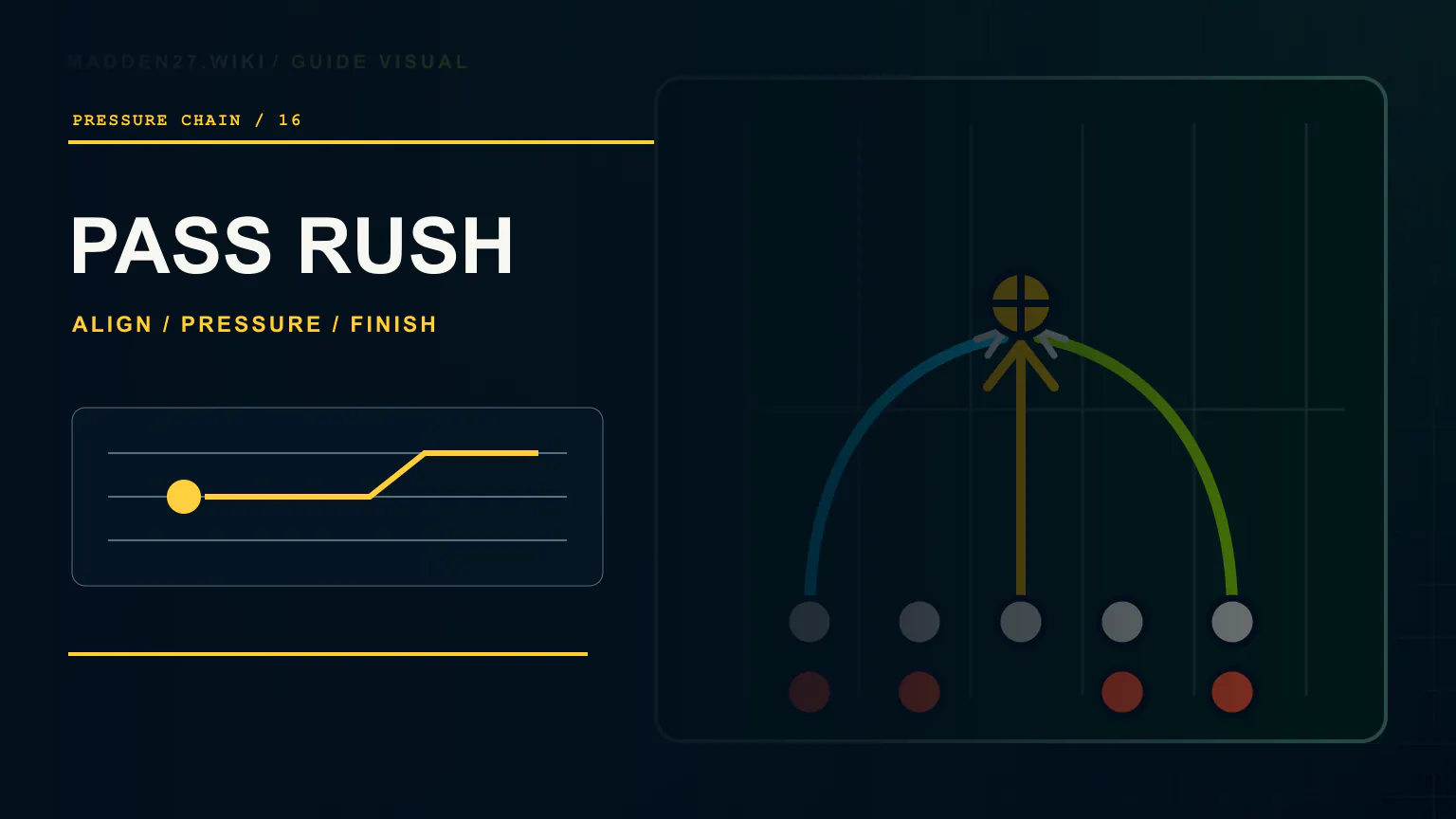
Start with pressure, not the sack total
A sack is the final outcome of several steps: the call must fit the offensive look, the rush must affect the pocket before the throw, the coverage must delay an easy answer, and a defender must close without losing the quarterback's escape lane. A zero-sack rep can still reveal useful pressure; a one-sack rep can still hide a coverage problem.
Use Pittsburgh's defensive playbook as one official pressure-focused starting point, not as a guaranteed best defense. EA says it includes Nickel and Dime looks that can bring pressure from linebackers and defensive backs, while also warning that extra rushers reduce the number of defenders available in coverage.
Set up a controlled pass-rush drill
Open Practice, keep the offense, defense, hash, down and distance, and offensive play fixed, and repeat the same rep. EA describes Practice as a no-clock, no-score environment where pass rush can be refined without normal game-flow interruptions.
Begin with a standard rush from a coverage call, then compare one pressure concept at a time. Do not add an undocumented pre-snap command or pass-rush button from memory; use Settings > Controls for the active platform and preset.
- Record the platform, mode, teams, difficulty, and title update
- Keep the same offensive formation and pass concept
- Run a base rush before testing an edge, linebacker, or defensive-back pressure
- Repeat enough reps to separate a pattern from one animation
- Change only one call or adjustment between comparison sets
Practice the four move families
Open EA's current Madden 27 Controls Hub, choose PlayStation, Xbox, PC, or Nintendo Switch 2, and open the Defense Engaged panel. That live panel is the source of truth for the active button or stick prompt; this guide does not substitute an older Madden layout for the current one.
Run separate sets for Speed Rush, Rip, Bull Rush, and Club/Swim. Start with the same defender and blocker, record which side of the pocket each attempt attacks, and avoid mixing moves until you can tell whether one move is winning, being stopped, or opening an escape lane.
- Speed Rush: test the outside shoulder and record whether the quarterback can step up
- Rip: test one edge and record the rusher's finish path
- Bull Rush: test a direct power path and record whether the pocket compresses before the throw
- Club/Swim: test the current panel's directional prompt and record the inside or outside counter
- After one-move sets, pair only two moves and compare them with the same blocker and pass concept
Measure the whole pressure chain
For each rep, record whether the quarterback threw cleanly, moved in the pocket, scrambled, was hit, or was sacked. Add time to throw, the first rusher to win, the escape lane, completion result, and yards allowed where you can observe them consistently.
A useful pressure call should improve more than the sack count. If sacks rise while quick completions and explosive passes also rise, the extra rush may be exposing coverage rather than improving the defense overall.
- Pressure before throw
- Quarterback movement or escape direction
- Hit or sack
- Completion and yards allowed
- Explosive pass allowed
Balance pressure against coverage
EA's official playbook guidance says pressure defenses can force quicker decisions, but sending extra defenders leaves fewer players in coverage. Mix pressure calls with coverage calls so the offense cannot assume every passing down brings the same rush.
A call still has to match personnel, formation, route threats, and the opponent's habits. Change the pressure presentation only after the base-rush and one-pressure sets show where the pocket is surviving.
Finish the play without selling out
Once the quarterback escapes the pocket, preserve a closing angle and choose the tackle risk that matches the distance. EA describes Wrap and Conservative tackles as less risky close-range choices, while Lunge and Dive are reach options with more risk; Hit and Strip are aggressive attempts and do not guarantee a fumble.
If pressure repeatedly arrives but the quarterback escapes, log which lane opens and which defender loses contain before changing the entire playbook. The correction may be rush spacing or pursuit rather than a need to send another blitzer.
Diagnose the result before changing calls
If there is no pressure, compare personnel fit and a different pressure location. If pressure arrives but sacks do not, inspect the escape lane and closing angle. If sacks rise with explosive completions, restore coverage. If one call works only once, mix the presentation instead of assuming the opponent will repeat the same protection answer.
Retest after roster, difficulty, or title-update changes. A dated practice log is stronger evidence than a clip with no opponent, settings, build, or failed attempts.