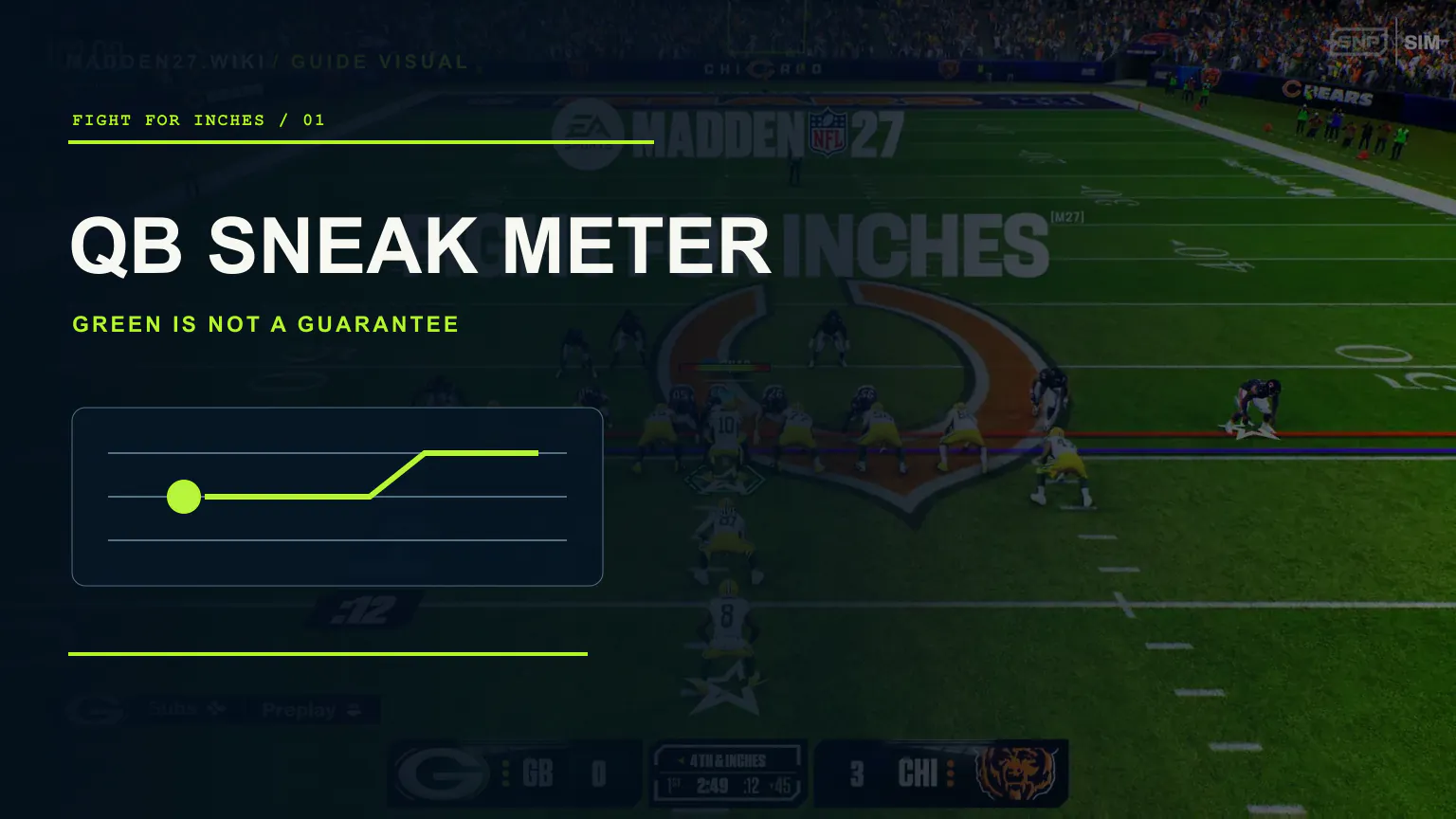
What the meter measures
EA describes the snap as a trench matchup, not a standalone quick-time event. The pre-snap comparison includes the Center, both Guards, the quarterback's push strength, and nearby defenders who can resist the surge.
Strength and Weight contribute on offense, while defensive Strength, Weight, and Block Shedding can make the push harder. Existing trench leverage also matters, so the same input can produce different outcomes against different fronts.
Why the timing window changes
The meter is contextual. EA lists difficulty, Home Field Advantage, the number of defenders in the box, yardage needed, and late-game or other high-stress situations among the factors that can tighten the window.
Use the visible window as information about the current attempt, not as proof that a sneak is always the right call. A crowded box or major ratings disadvantage can still stop a well-timed input.
Tush Push and the launch update
EA identifies the Tush Push as a Madden NFL 27 short-yardage addition. The official material establishes the concept, but it does not provide a complete playbook list, formation directory, or platform-by-platform command table.
The July 31 Launch Guide says beta feedback led EA to improve consistency when the QB Sneak Meter lands green. That is a stated post-beta change, not a published conversion rate or evidence that every green input succeeds.
A practical call checklist
Before calling the sneak, compare distance, box count, interior personnel, game pressure, and the downside of a failed attempt. Then treat meter timing as the final execution layer rather than the entire decision.
Button prompts, playbook availability, mode exclusions, and tuning can vary with platform or title updates. Record the platform and build before turning one result into a recommendation.
- Check the distance and defensive box count
- Compare interior offensive strength with the front
- Account for difficulty, venue pressure, and game situation
- Do not treat a green window as an automatic first down