What changed after the beta
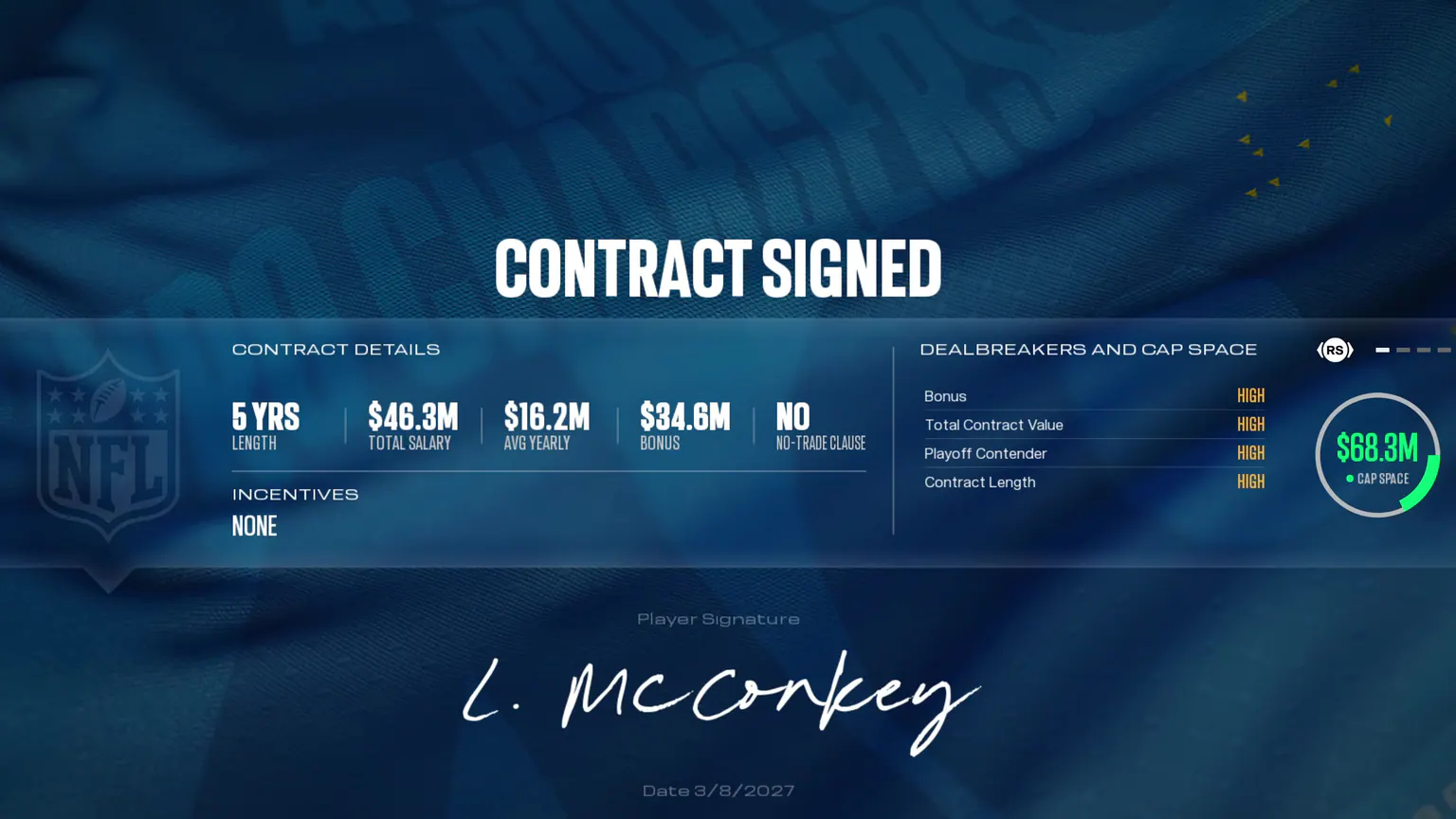
The most visible contract complaint from the beta was the loss of control over the initial proposal. EA's newer Launch Guide directly addresses that point: users can set Years, Salary, and Bonus before the conversation begins.
That change restores control over the opening terms without removing the new conversation layer. It is official launch guidance, not yet proof that every contract type, menu state, commissioner setting, or cap result works correctly on every platform.
- Starting Years: user-set before negotiation
- Starting Salary: user-set before negotiation
- Starting Bonus: user-set before negotiation
- Conversation outcome and cap ledger: still queued for retail verification
How interactive negotiations are announced to work
EA describes contract talks as a back-and-forth minigame rather than a single number screen. A negotiation can move among salary, guarantees, length and role expectations according to the player's Persona DNA and responses.
Choices affect Patience and Interest. In EA's announced example, a session ends when Patience reaches zero, while building Interest to 100 can close the deal. The interface is also intended to show ratings, Persona DNA and statistics.
- Prepare for the player's priorities before choosing a response.
- A curveball may change the subject of the negotiation.
- The number of sessions, resets and retry limits remain unverified.
The announced contract toolkit
Madden 27 expands the types of terms a Franchise user can work with. EA names guaranteed money, void years, incentives, no-trade clauses and custom contract structures among the additions.
Street free agents can receive longer deals, and a player may seek a new contract before entering the final year when Persona Engine context supports it. EA has not published detailed cap-accounting formulas for these tools.
The cited EA Franchise sources do not define GTD. They separately name guaranteed money as a contract lever, but that does not prove the letters label that field in every Madden 27 screen. Use the screen heading and surrounding labels, and record the platform and build before assigning a meaning or calculating an effect.
- Guaranteed contracts
- Void years and incentives
- No-trade clauses and custom structures
- Negotiations outside the final contract year
Build a salary-cap ledger before making an offer
EA's July 31 Launch Guide says Cap Hold was added to the salary-cap chart after beta feedback. Use the in-game breakdown as the authority for that save instead of importing a real-world NFL cap number or an older Madden formula.
Before negotiating, record current cap room and one row per decision: player, position, age, remaining years, salary, bonus or guarantees, visible cap hit, Cap Hold when shown, release or trade preview, and the role the roster would need to replace. After the action, capture the resulting chart and compare it with the preview.
- Start from the current save's in-game salary-cap chart
- Separate salary, bonus or guarantees, visible cap hit, and Cap Hold
- Compare the preview with the post-action cap chart
- Reserve future flexibility for draft picks, free agents, and extensions
- Create a new ledger version after league-setting or title-update changes
Franchise tags and the transition tag in Madden 27
EA says the exclusive franchise tag keeps the player with the team. The non-exclusive franchise tag permits outside offers and can return two first-round picks as compensation. The transition tag gives the original team a right to match an offer.
Those are EA's announced in-game choices. The cited material does not document every eligibility rule, tag salary calculation, matching screen, compensation transfer, or salary-cap edge case, so this page does not import unstated real-NFL rules into Madden.
- Exclusive franchise tag: keeps the player with the team in EA's description.
- Non-exclusive franchise tag: permits outside offers and an announced two-first-round compensation path.
- Transition tag: gives the original team a matching right in EA's description.
RFA tender choices and verification needs
EA lists first-round, second-round, original-round and right-of-first-refusal tender levels. Each is intended to balance the cost of protecting a young player against the draft compensation another team may owe.
Eligibility, tender salary, offer-sheet timing, matching controls, compensation delivery, and cap results remain unverified. Those unknowns prevent a universal best-tender recommendation.